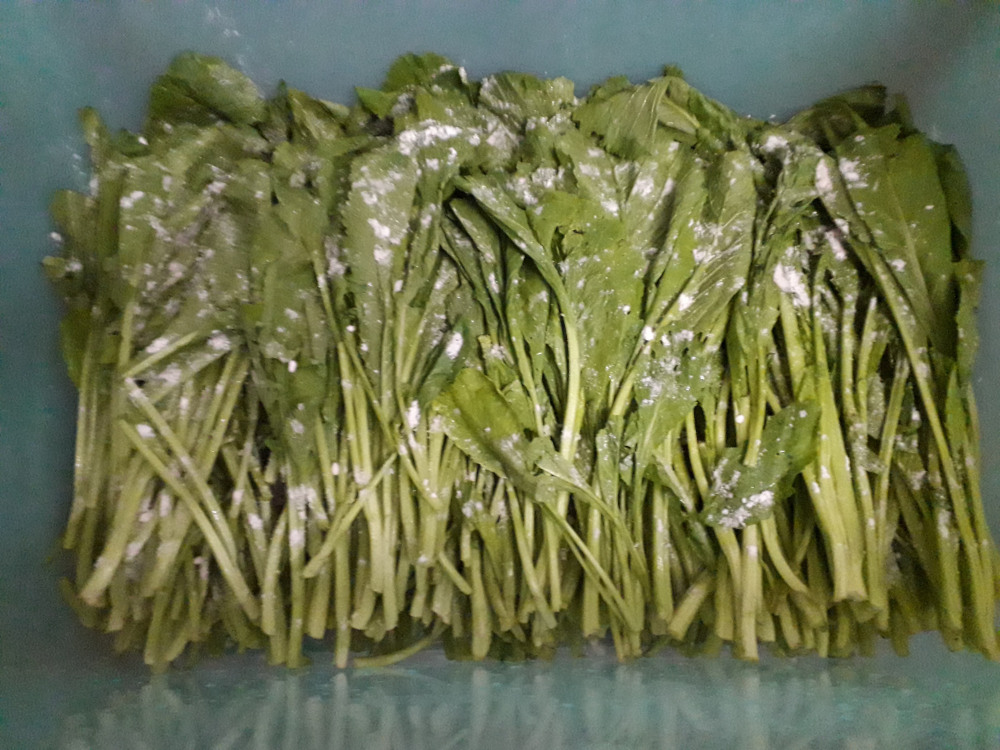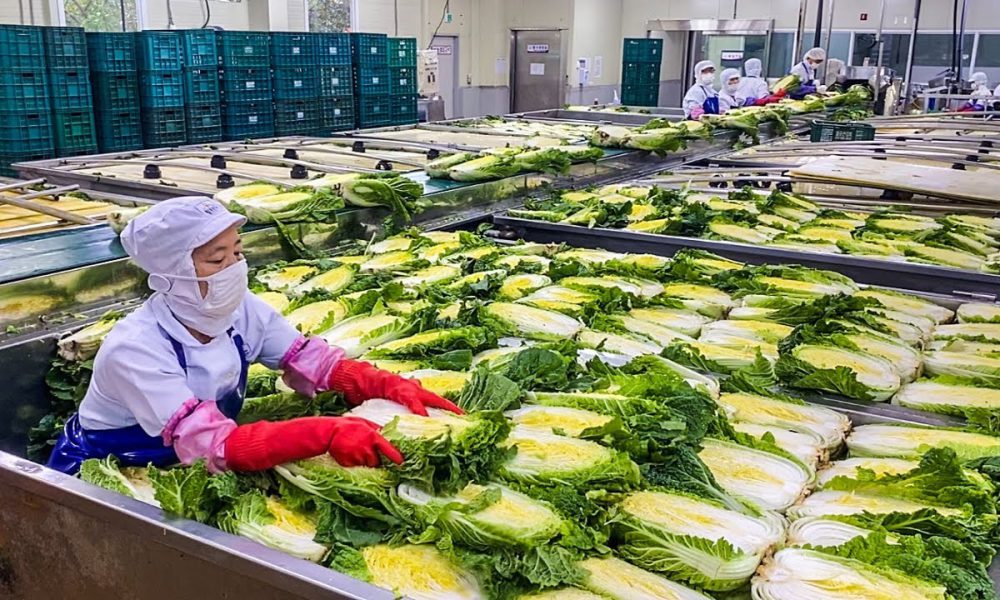

Where the physical transformation of Kimchi begins. By coating fresh Napa cabbages in Himalayan Pink Salt overnight, hypertonic osmosis triggers plasmolysis (protoplasmic separation)—drawing out cellular water, reducing turgor pressure, and turning rigid leaves into a pliable, crisp texture. This crucial step destroys spoilage-causing pathogens while creating the perfect salt-tolerant, anaerobic foundation for probiotic fermentation.
Salting Preservation – Magic of Kimchi Starts
How osmotic pressure and cellular plasmolysis transform raw vegetable tissues into a preserved, pliable base for lactic acid fermentation.
The Geolim Workflow
STAGE 01
Dry Salting
Fresh cabbages are sprinkled layer-by-layer with Himalayan Pink Salt and rested overnight in neat piles.
STAGE 02
Osmotic Water Release
Water flows rapidly from low-salt cell interiors toward the high-salt exterior to balance solute concentrations.
STAGE 03
Plasmolysis Shift
Protoplasts contract away from rigid cell walls, softening leaf walls without destroying structural crispness.
STAGE 04
Fresh Water Rinse
Salted leaves are thoroughly rinsed in clean water to wash off excess surface salt, locking in optimal salinity.
Cellular Plasmolysis Mechanics
Concave Plasmolysis
Optimal / Reversible
Occurs under controlled salting. Cytoplasm shrinks into half-moon shapes away from cell walls, but maintains vital plasmodesmata linkages with neighboring cells.
Result for Kimchi
Leaves become soft and pliable enough to fold without snapping, while retaining crisp tissue integrity.
Convex Plasmolysis
Over-salted / Irreversible
Occurs during extreme, prolonged hypertonic salt exposure. Cytoplasm detaches entirely from cell walls, severing all intercellular connections and killing cell vitality.
Result for Kimchi
Severe structural tissue collapse resulting in mushy, over-salted cabbage that cannot ferment properly.
Scientific Summary Matrix
| Phase | Osmotic Environment | Cellular Mechanism | Culinary Transformation |
| Fresh State | Hypotonic (Low Salt) | Full Turgor Pressure | Crisp, rigid, breakable leaves |
| Geolim Salting | Hypertonic (High Salt) | Water exits via exosmosis → Concave Plasmolysis | Soft, pliable, bendable texture ready for paste |
| Rinsing Phase | Isotonic Balance | Partial Deplasmolysis (Water Re-entry) | Removes surface salt while locking in leaf crunch |
| Microbial Impact | Selective Salinity | Suppresses putrefactive bacteria | Establishes safe zone for Lactic Acid Bacteria |