
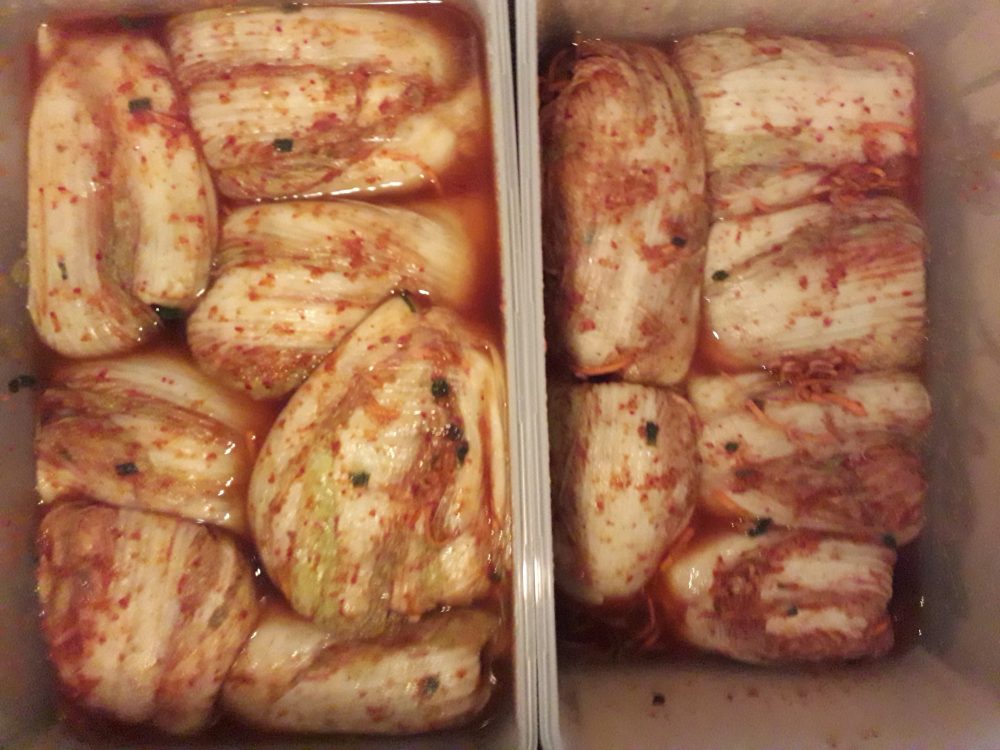
Represent the biochemical culmination of Kimchi making—where initial room-temperature microbial activation transitions into slow, controlled cold aging. Under anaerobic conditions, beneficial Lactic Acid Bacteria (Leuconostoc mesenteroides and Lactobacillus plantarum) convert simple sugars into lactic acid, carbon dioxide, and organic acids. Modern chill storage (or traditional underground Onggi pottery) regulates temperatures near 0°C to 2°C, suppressing spoilage organisms while preserving crisp texture, sparkling effervescence, and complex umami notes for months.
Fermentation & Chill Storage
The scientific transition from room-temperature microbial ignition to slow, cold-temperature aging—locking in crispness, acidity, and effervescent depth.
Thermal Aging Phases
Phase A: Room Activation (15–20°C)
18 – 36 Hours
Brief ambient exposure jumpstarts heterofermentative bacteria like Leuconostoc mesenteroides. Simple sugars derived from glutinous rice glue and vegetables begin converting into mild lactic acid and CO₂ bubbles.
Key Signal
Small gas bubbles appear, accompanied by a pleasant, slightly tangy aroma.
Phase B: Chill Ripening (0–2°C)
4 Weeks – Several Months
Transfer to controlled cold storage slows down metabolic velocity. Homofermentative species like Lactobacillus plantarum gradually take over, deepening complex acidity while preserving pectin tissue crispness.
Key Signal
Stable pH level (~4.2) delivering a clean, refreshing, carbonated bite.
Fermentation Mechanisms
MECHANISM 01
Anaerobic Submersion
Keeping cabbage pressed beneath brine seals out oxygen, preventing aerobic molds and yeast scum (*Gapeul*) from forming.
MECHANISM 02
Organic Acid Synthesis
Lactic and acetic acids lower pH levels to 4.0–4.5, naturally sterilizing the environment against harmful pathogens.
MECHANISM 03
Carbonation & Sparkle
CO₂ produced during early fermentation dissolves into liquid under cold pressure, giving mature Kimchi its refreshing fizz.
MECHANISM 04
Pectin Structure Defense
Sub-zero precision (0°C to -1°C) inhibits polygalacturonase enzymes, preserving leaf cellular crispness over months.
Fermentation Progression Matrix
| Stage | Dominant Microbe | pH & Acidity Target | Flavor & Texture Profile |
| Fresh (Geotjeori) | Raw environmental flora | pH 5.5 – 6.0 (Low Acid) | Saline, vibrant spice, crunchy raw cabbage flavor |
| Optimally Ripened | Leuconostoc mesenteroides | pH 4.2 – 4.4 (0.6–0.8% Acidity) | Refreshing tang, sparkling carbonation, balanced umami |
| Fully Aged (Mukeunji) | Lactobacillus plantarum | pH 3.8 – 4.0 (>1.0% Acidity) | Deeply sour, soft texture, rich complex amino acid profile |